National flower: Butterfly Jasmine
(Hedychium Coronarium Koenig).
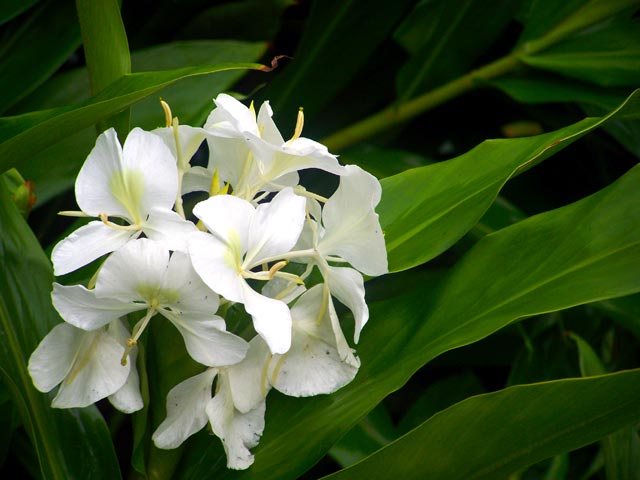
An endemic jasmine specie used by the Cuban women in the independence war against Spain to deliver messages to the battlefields. It symbolizes purity, rebelliousness and independence and grows in humid places as banks of rivers and lagoons, but it is also cultivated in yards and gardens of many Cuban houses.
The plant that gives origin to this beautiful, fragrant and white flower grows a meter and half high.
National Bird: Tocororo
(Priotelus temnurus).
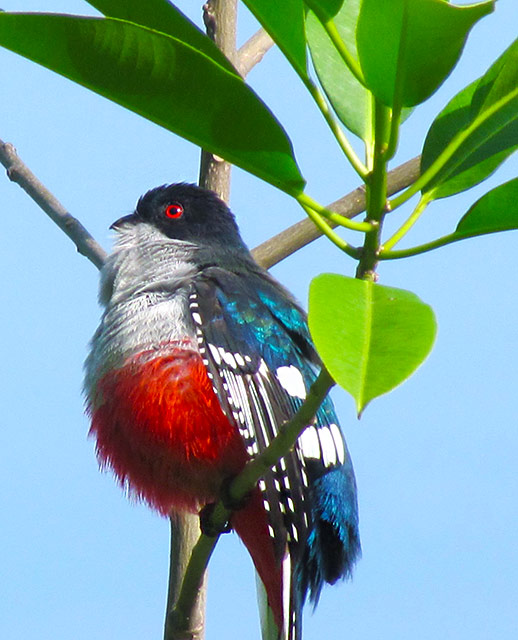
Autochthonous bird related to the quetzal. The Tocororo's feathers exhibit the colors of the Cuban flag: red, blue and white and inhabits in the forests of the whole country, mainly in the mountainous areas.
Its indigenous name is: Guatiní.
National Tree: The Royal Palm
(Roystonea Regia).
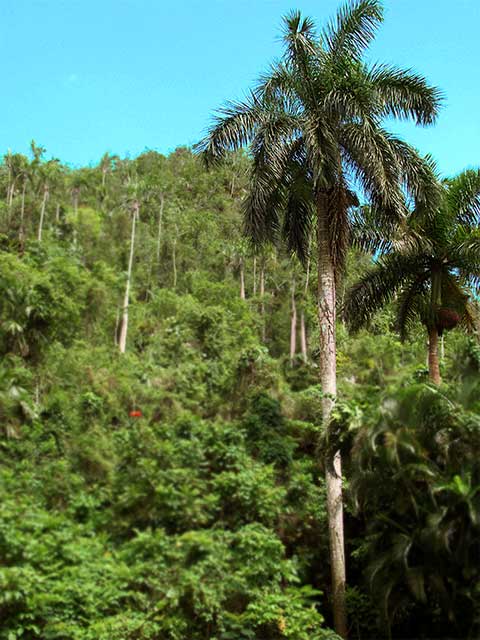
Although it is not a Cuban specie, it is present in the country's whole landscape and symbolizes the undeniable character of the Cuban people, as it endures the most furious gales on foot, without falling.
In most cases, its height varies between 40 and 50 feet and it is crowned with a beautiful crest. Due to its majestic structure and height, as well as its strength and its many uses the Royal Palm is considered all over the country as the queen of our fields.
The National Flag
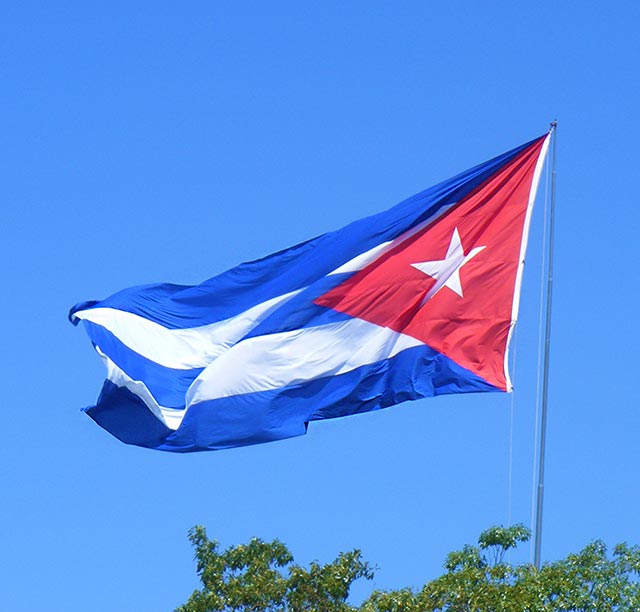
It was first raised in the city of Cardenas (Matanzas Province), when in 1850 a group of insurrectionist took up arms against the Spanish colonial power.
The three blue stripes represent the departments that the Island was divided into at that time. The two white stripes evoke the purity of the intentions for independence of the people. The equilateral triangle stands for freedom, equality and fraternity. Its red color is the announcement of the blood that would be necessary to shed in order to reach the independence. The white and lone star is the symbol of absolute freedom among people..
When the Independence War started, on October 10, 1868, Carlos Manuel de Cespedes ordered to design another another flag, which also stands in the hall of sessions of the Cuban Parliament.
The National Shield
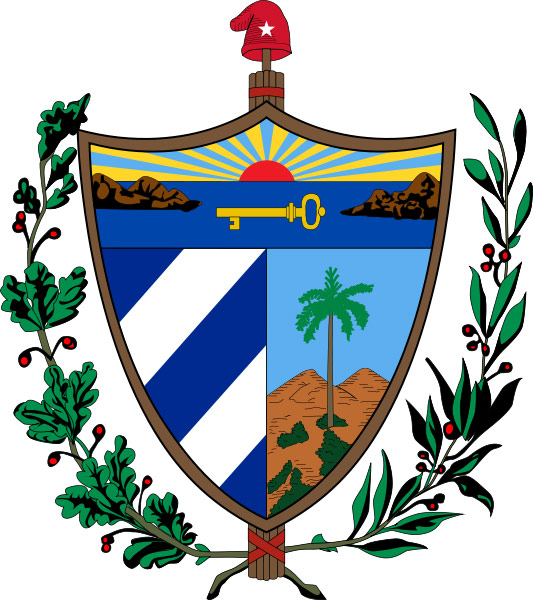
It is shaped like an ogival shield. Its upper section portrays a golden key that symbolizes Cuba's key position among the two Americas, therefore the name "The Key to the Gulf". The rising sun stands for the emergence of a new nation. The three blue stripes, separated by two white ones, represent the departments that Cuba was divided into, during the colonial period. The Royal Palm which appears in the third space, represents the noble and serene firmness of the Cuban people.
The Nacional Anthem
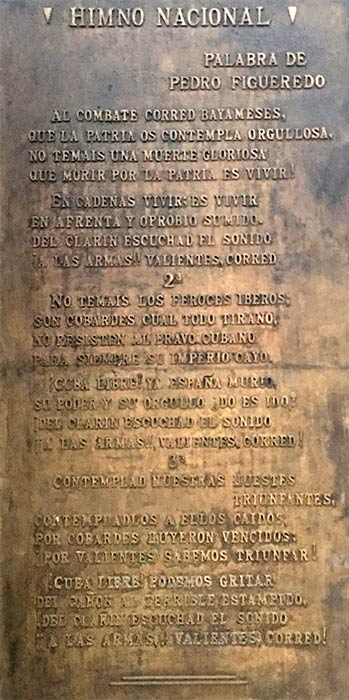
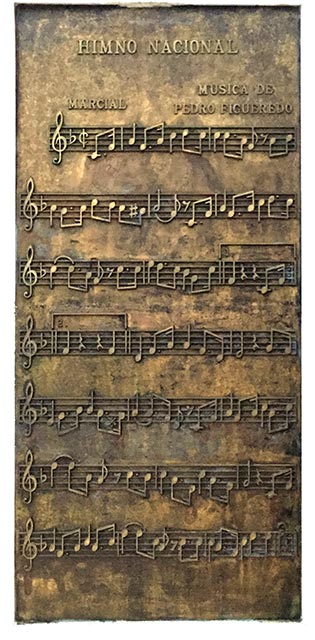
It was the patriot Perucho Figueredo who composed, in 1867, the music of the National Anthem. Later, in 1868, when the independence forces seized the city of Bayamo (Granma Province), Figueredo himself wrote the lyrics: